Villa Extension Dubai: Costs, Permits and Turnkey Guide
Need more living space without leaving the neighbourhood you love? A well-planned villa extension in Dubai can add bedrooms, a home office, or a larger living area, often costing less than buying a new villa and avoiding the transfer fees and search time.
Why work with Lacasa Line Decoration Design And Fitout LLC
- Specialists in Dubai villa renovations and extensions
- Design, approvals and turnkey execution all under one roof
- Projects from AED 100,000 for full villa transformations
- 5-star Google rating from verified clients
- Direct communication with your dedicated project manager
- In-depth knowledge of community guidelines (Emaar, Nakheel, DAMAC)
What is a villa extension and when does it make sense
A villa extension adds usable square footage to your existing home, either by expanding outwards, building upwards, or converting outdoor areas into living space. In Dubai, many villa owners choose to extend rather than move when their family grows or their lifestyle changes. Suburbs like Arabian Ranches, the Springs, and Jumeirah offer plots large enough for side, rear, or garden room extensions. Moving to a larger villa often means paying 2% transfer fee plus agency commission, a 10-20% premium on the new property, and months of searching. A well-executed extension, starting from around AED 100,000, can deliver the extra space at a fraction of that cost.
Popular types of villa extensions in Dubai
Every villa plot is different. The most common extension types we see across Dubai include:
- Upward extension Adding a partial first floor over a single storey villa. This works well in communities like Mirdif or Al Barsha where side setbacks are limited but the roof structure can handle additional load.
- Outward extension Extending the ground floor sideways or to the rear. This is typical for villas on larger plots in Arabian Ranches, Palm Jumeirah, or Emirates Hills, often to create a larger living/dining area or an extra bedroom.
- Garden room or annex Converting part of the garden into a self contained living unit, a home office, or a guest suite. These structures require careful attention to DEWA connections and cooling.
- Conversion and reconfiguration Turning an existing garage, storage, or unused terrace into habitable space. This often needs less structural work but still requires authority approvals.
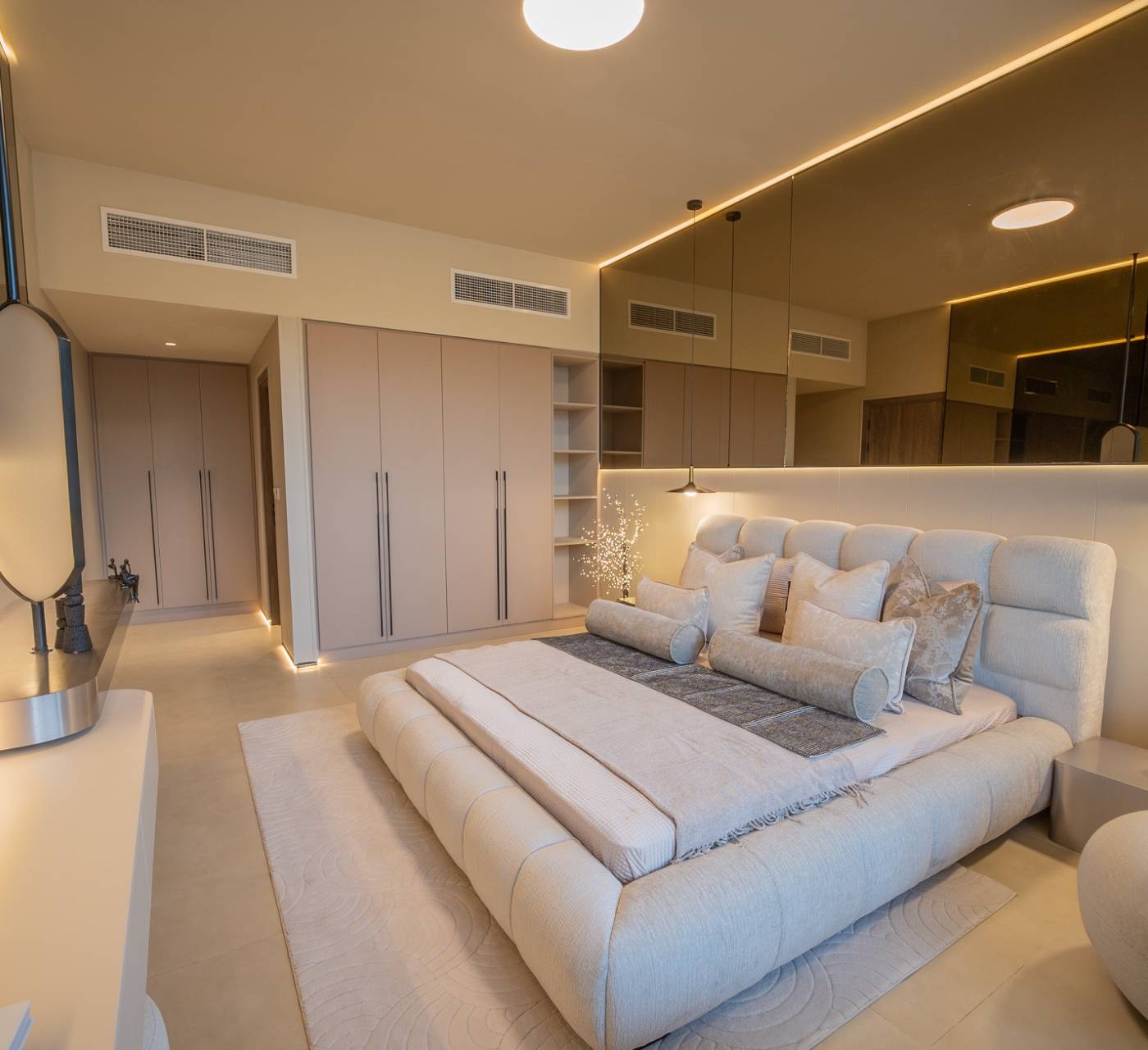 villa extension in Dubai." loading="lazy" decoding="async" /> A bedroom redesigned as part of a whole-villa extension project in Dubai, combining built-in storage and soft LED lighting.
Permits and community approvals
Any structural extension in Dubai requires approval from the Dubai Department of Economy and Tourism (DET) through the Trakheesi system. Additionally, if your villa sits in a master community, you must obtain a No Objection Certificate (NOC) from the master developer. Emaar, Nakheel, and DAMAC each have their own guidelines covering setback distances, maximum height, external finishes, and construction working hours.
Lacasa Line handles the full permit process. We prepare architectural drawings that meet Dubai Building Code, submit them through Trakheesi, liaise with the master developer, and secure all necessary NOCs before breaking ground. This usually takes 3 to 6 weeks depending on the complexity and the community. For a deeper look at permits, read our guide on villa renovation permits in Dubai.
Villa extension cost in Dubai
The cost of a villa extension depends on the type, size, and finish level. As a rough guide, you can expect:
- Basic extension (shell and core, standard finishes): AED 1,800 to AED 2,500 per square metre
- Mid-range extension (good quality finishes, bespoke joinery): AED 2,800 to AED 4,000 per square metre
- High-end extension (premium materials, smart home integration, architectural lighting): AED 4,500 to AED 7,000+ per square metre
Example: A 50 m² outward extension in a community like Arabian Ranches, finished to a mid-range standard with a new bedroom and en-suite, typically falls between AED 140,000 and AED 200,000. A partial first-floor addition of 80 m² with two bedrooms and a bathroom can cost from AED 280,000 to AED 450,000. These figures include design, authority approvals, structural works, MEP, and internal finishing. For a detailed breakdown of all renovation costs, see our article on villa renovation costs in Dubai.
Additional cost factors: foundation reinforcement (if extending upwards), kitchen or bathroom relocation, landscaping reinstatement, and temporary accommodation if you need to move out during heavy works.
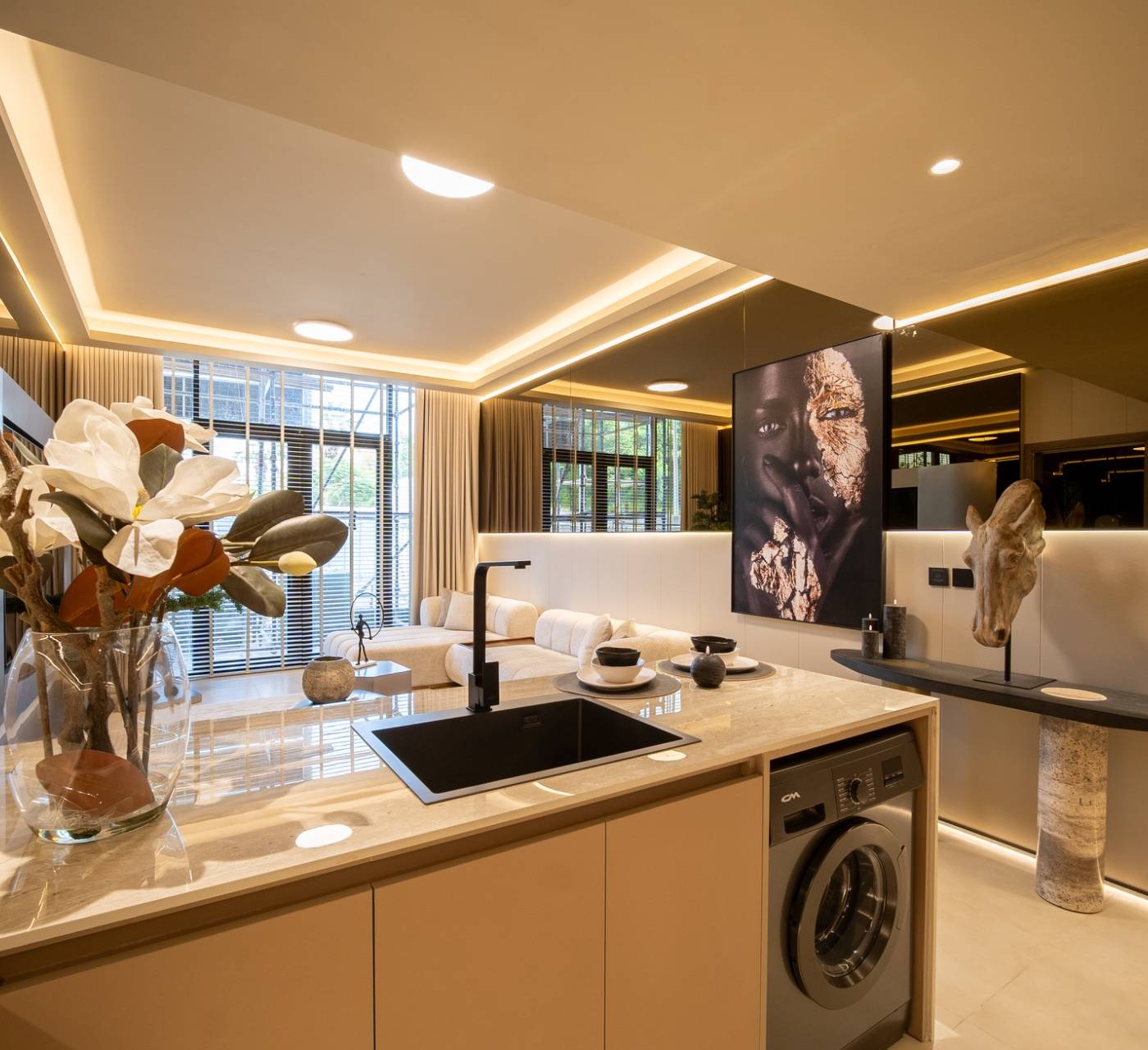 A full-gut villa extension in Dubai transformed this kitchen and living space, adding a marble island and reflective finishes.
How a turnkey villa extension works
Working with a turnkey contractor means one team handles the entire project from concept to handover. Here is the typical process for a villa extension in Dubai with Lacasa Line:
- Initial consultation We visit your villa, discuss your space needs, and measure the site. We can often give a rough budget range at this stage.
- Concept design and feasibility Our design team produces 2D layouts and 3D visuals. We check structural feasibility and prepare for permit submission.
- Permits and NOCs We submit all drawings to DET via Trakheesi and coordinate with your master developer. This step runs in parallel with detailed design.
- Procurement and mobilization Once permits are issued, we order long-lead items, set up site hoarding, and bring in our in-house trades.
- Construction Foundation, blockwork, roofing, MEP rough-in, plastering, joinery, and painting. We work in phases according to Dubai Municipality safety standards.
- Finishing and snagging Tiling, sanitary ware, lighting, AC commissioning, and a thorough snag list walkthrough with you.
- Handover We hand over a clean, fully functional space, and provide a warranty on workmanship.
Throughout the project you have a single project manager as your point of contact. Madani Munshi, a recent client in Dubai, shared this feedback after his villa extension:
"Great workmanship and attention to detail Absolutely loved working with meershad who was always helpful and willing to find the best interest of client"
Madani Munshi, 5-star Google review
This level of personal commitment is what makes a turnkey approach worth the investment.
If you are evaluating different companies, our guide on villa renovation contractors in Dubai can help you ask the right questions. When you are ready to discuss your specific project, contact Lacasa Line for a villa extension consultation at our Dubai office.
Frequently asked questions
How much does a villa extension cost in Dubai?
A straightforward ground-floor extension typically ranges from AED 100,000 to AED 350,000 for 30 to 80 m². Upward extensions, which require structural reinforcement, start around AED 250,000 and can exceed AED 600,000 for larger, high-spec additions. Final cost depends on the size, materials, and community approval requirements.
What permits do I need for a villa extension in Dubai?
You need a building permit from DET via Trakheesi, plus an NOC from your master developer if your villa is in a managed community. Additional approvals from Dubai Municipality and possibly RTA may apply if the work affects the right of way. Working with a contractor who handles the full paperwork cycle avoids months of back-and-forth.
Can I extend my villa upwards in Dubai?
Yes, adding a partial or full first floor is allowed in many Dubai communities provided the existing foundation and structure can support the additional load. A structural engineer must certify the design, and the master developer’s height and setback limits must be respected. Your contractor will manage these checks during the design phase.
How long does a villa extension take in Dubai?
A typical ground-floor extension takes 4 to 6 months from design to handover. An upward extension usually takes 6 to 8 months. The timeline widens if the extension involves relocating kitchens or bathrooms, or if the community NOC process takes longer than average.
Do I need to move out during a villa extension?
For a rear or side ground-floor extension, you can often stay in the villa if the construction is well sealed off and noise is managed. For a first-floor addition or extensive reconfiguration that affects the main living areas, temporary relocation is safer and faster. Your project manager will advise based on the scope.